The best battery is the one sized to your overnight use, with the backup you need and a good match to your inverter. For most Adelaide homes that's 10 to 20 kWh usable. Sigenergy is our pick for modular, expandable systems; Sungrow suits homes already on a Sungrow inverter; Tesla Powerwall suits whole-home backup in a single unit. Eligible models qualify for the federal battery rebate.
- There's no single best battery; the best one fits your overnight use, backup needs and inverter.
- Most Adelaide homes suit 10 to 20 kWh usable.
- Sigenergy suits modular, expandable systems; Tesla Powerwall suits single-box whole-home backup.
- Compare usable capacity and continuous power, not nominal capacity.
- All the brands we install can qualify for the federal battery rebate.
The brands compared at a glance
We install Sigenergy, Sungrow, Tesla Powerwall, GoodWe and BYD batteries. Here's how they differ in the ways that actually matter for a home:
| Brand | How it's built | Best suited to |
|---|---|---|
| Sigenergy | Stackable battery modules with Sigenergy's own hybrid inverter | New solar and battery, or homes that want to add capacity later |
| Sungrow | Modular battery paired with a Sungrow hybrid inverter | Homes already on a Sungrow inverter, or larger systems |
| Tesla Powerwall | Single complete unit; expand by adding more units | Whole-home backup and people who want one well-known box |
| GoodWe | Modular battery paired with a GoodWe hybrid inverter | Solid value on new installs, including three phase |
| BYD | Modular battery towers that pair with a range of hybrid inverters | Matching an existing compatible hybrid inverter |
Specs and model names change often, so we check the current datasheet for your quote rather than relying on a brochure from last year.
Start with your evening load, not the brand
The biggest factor in whether a battery works for you is size, not badge. Many homes use somewhere around 8 to 15 kWh between sunset and sunrise, so 10 to 20 kWh of usable capacity often covers it.
Two numbers matter on any datasheet:
- Usable capacity (kWh): how much energy you can actually use. Compare usable, not nominal.
- Continuous power (kW): how much it can run at once. This decides whether it can handle the oven, kettle and air con together on a hot evening.
Our battery sizing guide shows how to work out your overnight use from your bill.
Send us a recent bill. We'll call to talk it through, then send a free, itemised quote with the battery options that fit side by side, rebate applied.
Sigenergy: the modular option
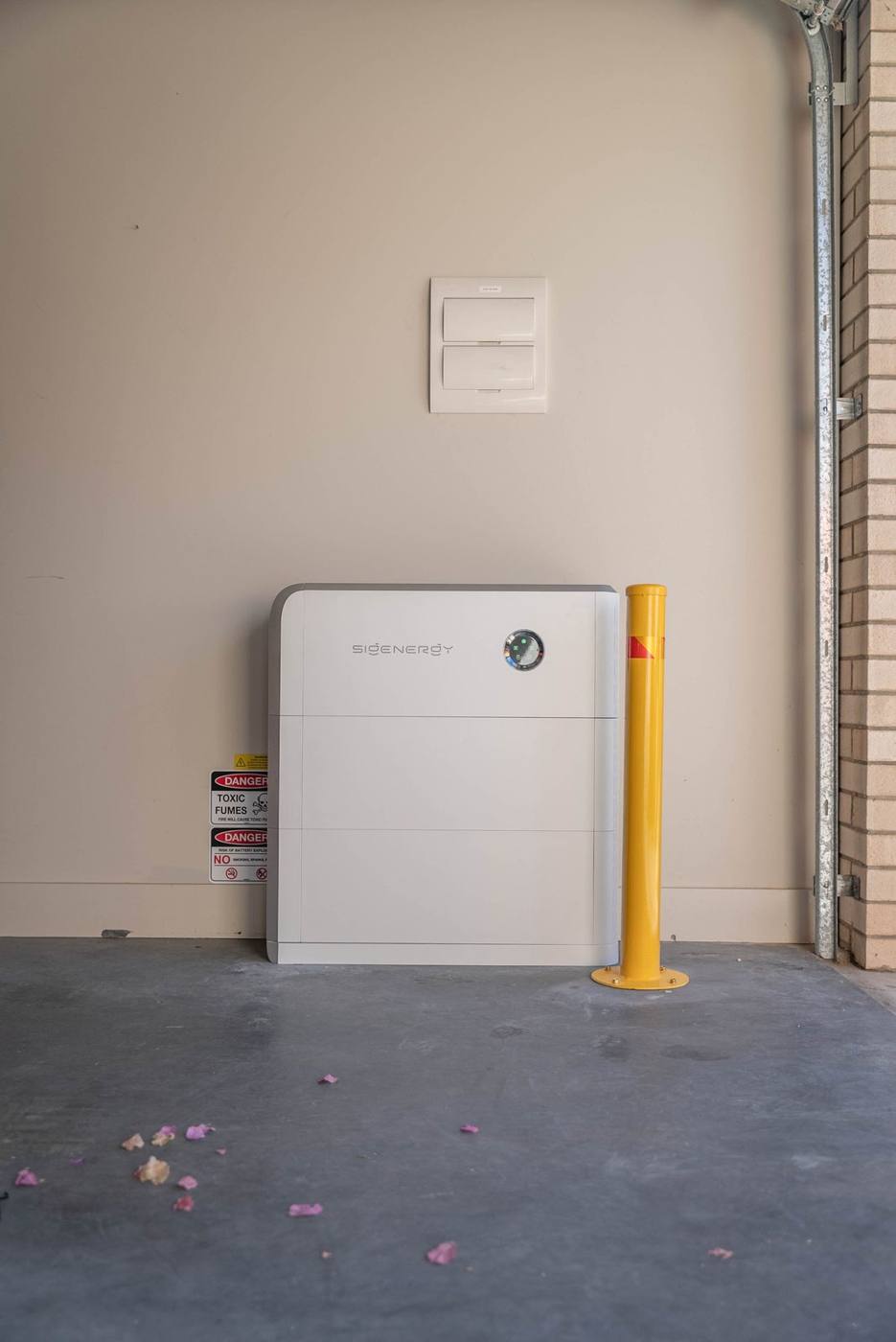
Sigenergy shows up in a lot of our recent installs. The modules stack, so you can start at the size you need now and add more later if you buy an EV or the family grows. The inverter, battery and backup gateway all come from one maker, which keeps the system tidy and the monitoring in one app.
Recent jobs include an 18.3 kW solar and 35 kWh Sigenergy system in Hayborough on three phase, and 26.3 kWh usable in Myponga. It also scales up: the Kangarilla General Store runs a 96 kWh Sigenergy battery with backup. More on our Sigenergy installer page.
Sungrow, GoodWe and BYD
Sungrow inverters are common on SA roofs. If yours is a Sungrow hybrid in good shape, a Sungrow battery is often the simplest path.
GoodWe is a strong choice for new installs, and usually the lowest cost per kWh on our jobs. See GoodWe batteries. We've installed a 12.75 kW Jinko and GoodWe system with 24 kWh usable and blackout backup in Morphett Vale, and a 36 kWh GoodWe battery with a 25 kW inverter in Craigburn Farm.
BYD makes modular battery towers that work with a range of hybrid inverters, which can be handy when you want to keep a compatible inverter you already have.
Tesla Powerwall: the single-box option
Powerwall is one complete unit, so there's no stacking of modules. If you need more, you add another Powerwall. It's a good fit if whole-home backup matters to you and you like having one well-known product with a strong app.
NG Elec is a Tesla Certified Installer (see our Tesla Powerwall installer page). Our Tesla Powerwall installation guide covers sizing, backup and what the install involves.
What changes the result more than the brand
- Enough solar to fill it. A great battery on a small, older array sits half empty in winter.
- Backup design. Essential circuits or whole home is a wiring decision, not just a battery choice.
- Your switchboard. Older boards sometimes need work before a battery can go in.
- Setup and tuning. As one of our customers, Paul, put it: "NG fined tuned the system over 2 days and we can now run 24hrs on solar and battery."
- The rebate. Every brand here can qualify for the federal battery rebate, with the first 14 kWh getting the full rate.
One more thing that matters more than the badge: how the battery is set to charge. On a Solar Sharer plan, SA retailers give you free grid power from midday to 3pm, capped at 24 kWh a day. On cloudy winter days, or if your solar is on the small side, the battery can top up free in that window and run the house through the evening. We can set the charge schedule up as part of the build, and we size the system with it in mind. Those plans usually have higher supply and peak charges, so compare the total cost. More in Solar Sharer free power.
How to choose: a quick checklist
- Work out your overnight use from your bill or inverter app. That sets the usable capacity you need.
- Decide on backup. Nothing, essential circuits or whole home. This narrows the brands and sets the switchboard work.
- Check your inverter. If it's a healthy hybrid, a matching battery is often the simplest. If it's old, a new hybrid system may make more sense.
- Think about the next five years. An EV, a pool or more people at home all point to a modular battery you can grow.
- Compare quotes on the same basis. Usable kWh, continuous kW, backup scope, warranty and the rebate amount, line by line.
Do those five things and the brand choice usually becomes obvious. If two options still look close, pick the one with the better local support and the installer you trust.