Solar Sharer is a federal government offer. Since 1 July 2026, SA retailers must offer at least one plan with at least three free hours of grid electricity a day. In SA the window is 12pm to 3pm, capped at 24 kWh a day. You need a smart meter and you have to choose the plan. It pays best when you can move a good chunk of use into the window.
- SA retailers must offer a plan with free grid power from 12 to 3pm daily, capped at 24 kWh.
- You need a smart meter and you have to opt in to the plan.
- These plans usually have higher supply charges and peak rates, so compare the total cost.
- A battery can top up free in the window on winter days or with a small array, then run the evening.
- NG Elec can set up the charge schedule at commissioning and sizes systems with the window in mind.
Our calculator shows the figure before and after 1 January 2027.
What the Solar Sharer offer is
Solar Sharer is a federal government offer for households. Since 1 July 2026, electricity retailers in South Australia, NSW and South-East Queensland must offer at least one plan with at least three hours of free grid electricity every day.
In SA the free window is midday to 3pm. Free use is capped at 24 kWh per day.
- You need a smart meter.
- It's opt-in. Nothing changes unless you choose a Solar Sharer plan.
- It applies to power you draw from the grid in the window, whether that runs the house or charges a battery.
The catch
Free hours don't make a plan cheap on their own. Solar Sharer plans usually come with higher daily supply charges and higher peak rates than other plans.
So compare the total cost over a year, not just the free bit. As a rough guide, it pays best when you can move a good chunk of your use, often 6 kWh or more a day, into the 12 to 3 window. If most of your power gets used at night and you can't shift it, the higher peak rate can cancel out the free hours.
We can't promise a saving, because it depends on the plan and how you use power. What we can do is help you work out how much use you could realistically move.
Send us a recent bill. We'll call to talk it through, then send a free, itemised quote, with solar and a battery sized around your winter use and the 12 to 3 window.
Who it suits
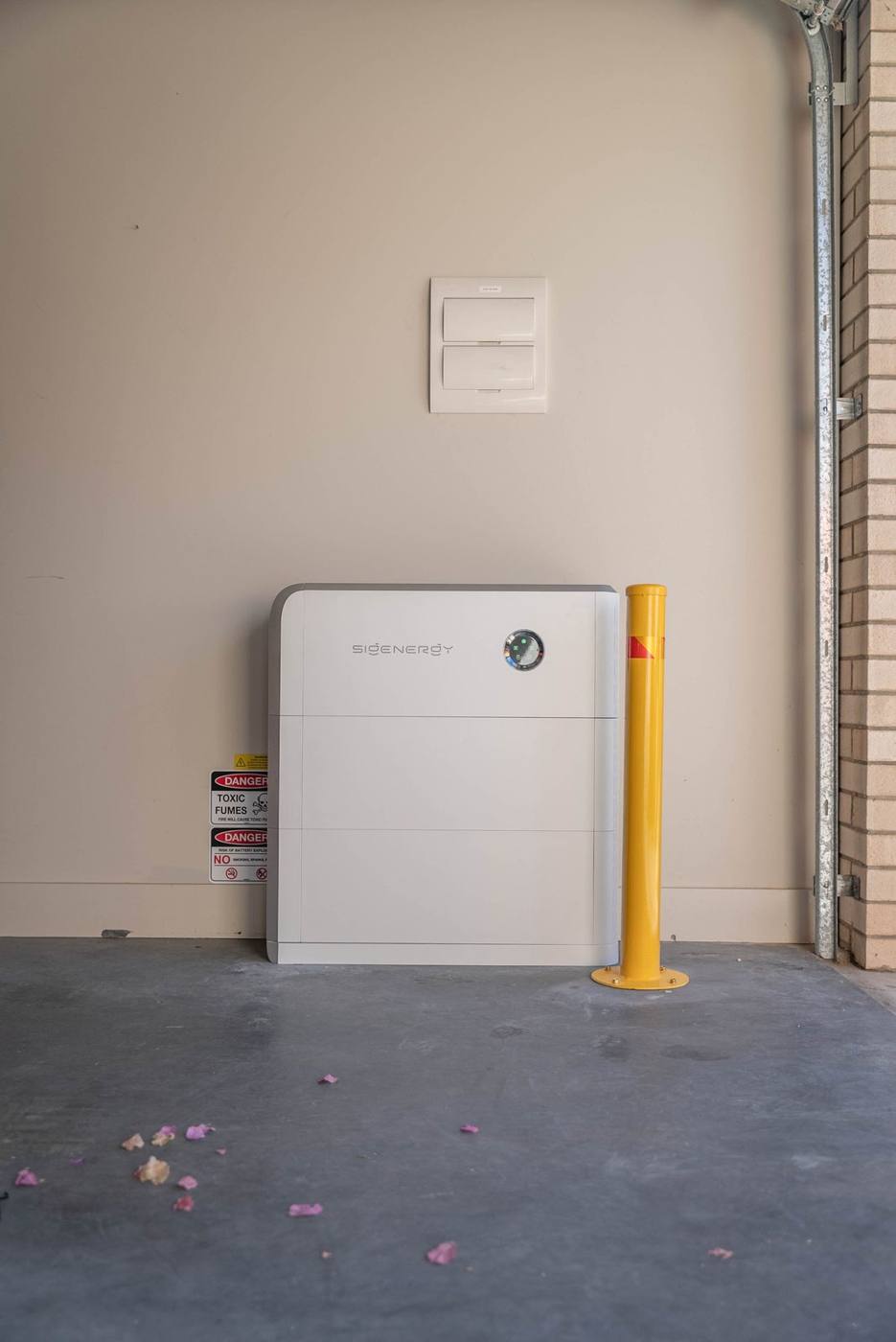
- Battery owners. A battery can soak up free power in the window and use it after 3pm, which is where it helps most.
- Homes with a small or shaded roof. If you can't fit a big array, the free window makes up some of the difference.
- People who can shift loads. Pool pumps, hot water on a timer, washing, dishwashers and EV charging can all be set to run between 12 and 3.
- Households home during the day. Retirees, shift workers and people working from home use more in the window anyway.
It suits less well if you use very little power, can't move anything into the window, or don't have a smart meter yet.
Why it matters most with a battery
Adelaide solar makes about 5.8 kWh per kW of panels a day in summer, but only about 2.4 in winter. That's around 40% of summer output. On a grey July week, a lot of batteries never get full, so the house ends up buying power at the evening peak.
Solar Sharer can help with that. On cloudy winter days, or if your array is on the small side, the battery can top itself up from the grid for free between 12 and 3, then run the house through the evening peak.
It also helps homes whose roof can't fit a big array. A smaller roof no longer has to mean a small battery, because the free window does some of the filling. If you already have solar, it's another reason to look at adding a battery to your existing system.
Worked example: an average July day
These numbers are illustrative only, to show how it works. Your plan, use and system will differ. They're simplified and not a quote or a promised saving.
Example 1: 6.6 kW of panels and a 16 kWh battery
- Panels make: 6.6 kW x 2.4 kWh = about 15.8 kWh on an average winter day.
- House uses in daylight: 7 kWh. That leaves about 8.8 kWh of solar for the battery.
- Free top-up, 12 to 3: the battery takes another 7.2 kWh from the grid to reach 16 kWh. That's 7.2 kWh against the 24 kWh daily cap, so plenty of headroom.
- Evening and overnight: the house uses 13 kWh from 3pm to the next morning. The full battery covers it with about 3 kWh to spare.
Without the free window, the battery would only hold about 8.8 kWh, and the house would buy about 4.2 kWh (13 minus 8.8) at normal rates, much of it at the evening peak.
Example 2: a small roof, 3 kW of panels and a 14 kWh battery
- Panels make: 3 kW x 2.4 kWh = about 7.2 kWh, which is roughly the 7 kWh the house uses in daylight.
- Free top-up, 12 to 3: almost all of the battery's charge comes from the window, about 13.8 kWh (14 minus the 0.2 kWh of spare solar). Still under the 24 kWh cap.
- Evening and overnight: 13 kWh from the battery, with about 1 kWh left.
On a genuinely cloudy day, panels make less than the winter average, so the free window does even more of the work. In summer the same 6.6 kW array makes about 38.3 kWh (6.6 x 5.8), so the panels usually fill the battery on their own and the window becomes a bonus for things like the pool pump or an EV.
One limit to know: a very large battery that starts the window nearly empty can't fill completely from the window alone, because of the 24 kWh cap.
How NG Elec sets it up and sizes for it
We build this in from the start rather than leaving you to work it out later.
- Charge schedule at commissioning. If you're on a Solar Sharer plan, when we commission the battery we can set it to charge from the grid in the 12 to 3 window.
- Sizing with the window in mind. We look at your winter use, how much roof you've got and what the free window can add, then size solar and battery to suit. Our battery sizing guide shows the basics.
- Load shifting. We can put hot water and other big loads on timers so they run in the window or off your solar.
- Plan changes later. If you switch plans, the schedule can be changed to match.
We can set it up, but the plan choice is yours. Compare a Solar Sharer plan against your current one before you switch.
Getting started
- Check your meter. You need a smart meter. Your bill or retailer can tell you.
- Look at your use. A recent bill shows how much you use and roughly when.
- Compare plans properly. Look at supply charges and peak rates, not just the free hours.
- Get a battery quote that accounts for it. Send us a bill and we'll size a system around winter use and the free window.
Want to see what systems cost? Our solar and battery prices page lists real 2026 jobs, or ask for a free, itemised quote.