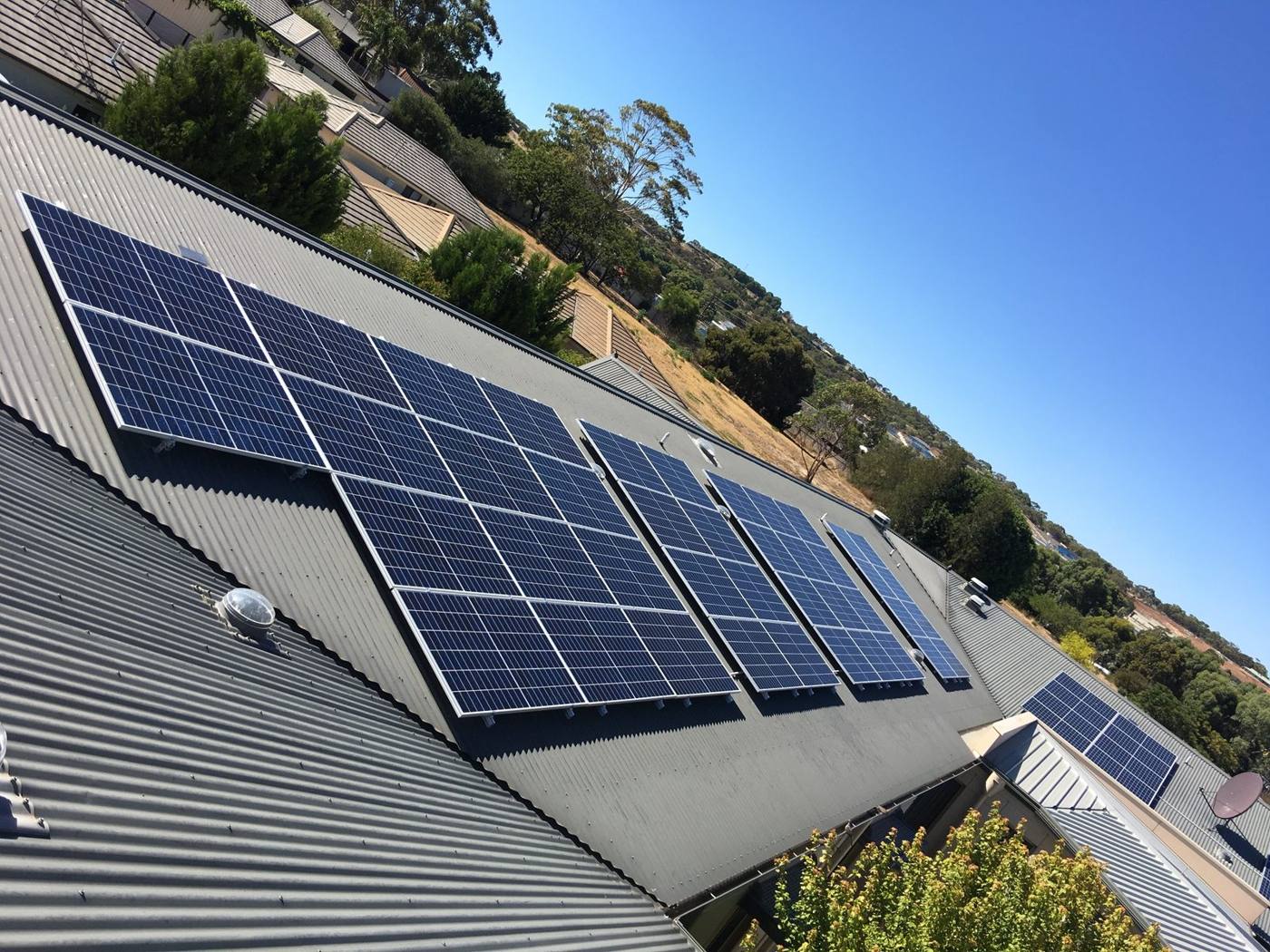
Many South Australian family homes suit somewhere around 6.6 to 13 kW of solar. A family using 15 to 25 kWh a day usually suits 6.6 to 10 kW, or about 15 to 22 panels at 450 W each. Add more if you're planning a battery, EV or heat pump, and size around winter, when Adelaide panels make about 40% of their summer output.
- Most Adelaide family homes need 6.6 to 10 kW, about 15 to 22 panels at 450 W.
- Panel count is system size divided by panel wattage.
- Winter output in Adelaide is about 40% of summer, so size for winter if you want low bills all year.
- Adding a battery usually needs more solar to fill it.
- Single phase homes are usually limited to around 10 kW of inverter.
Step 1: Start with your daily usage
Your power bill shows how many kWh you use per day, or you can divide the total kWh by the days in the billing period. That's the number that matters.
Look at a summer bill and a winter bill if you can. Summer often has air con in the evening, winter has heating and shorter days. Here's a rough guide for SA homes:
| Daily use | Typical household | Solar size to look at |
|---|---|---|
| 10 to 15 kWh | Couple, mostly out during the day | 5 to 6.6 kW |
| 15 to 25 kWh | Family home, some air con | 6.6 to 10 kW |
| 25 to 40 kWh | Big family, pool, ducted air con | 10 to 13 kW (single phase limits apply) |
| 40 kWh plus | Large home, EV, three phase | 13 kW plus, usually three phase |
If you already have solar, your bill only shows what you buy from the grid, not what you use. In that case your inverter app or a full year of bills gives a better picture. Send us both and we'll work it out.
Step 2: Turn system size into a panel count
Panel count is simply the system size divided by the wattage of each panel. Panels vary by brand and model, so here's an example using a 450 W panel:
| System size | Panels at 450 W |
|---|---|
| 5 kW | About 11 |
| 6.6 kW | About 15 |
| 10 kW | About 22 |
| 13 kW | About 29 |
Higher wattage panels mean fewer panels for the same system, which helps on smaller or chopped-up roofs. That's why comparing quotes on panel count alone doesn't tell you much. Compare the total kW and the brands.
Send us a recent bill and a few roof photos. We'll call to talk it through, then send a free, itemised quote, sized to your usage.
Step 3: Check the winter numbers
This is where a lot of systems come up short. In Adelaide, solar makes around 5.8 kWh per kW of panels per day in summer and around 2.4 kWh in winter, so winter is roughly 40% of summer.
Take a 6.6 kW system as an example. On an average summer day that's about 38 kWh. On an average winter day it's about 16 kWh. A system that wipes out your summer bill can still leave a winter bill.
If you want low bills all year, we size around winter. That usually means a bigger system, often paired with a battery.
A worked example
Say your home uses 20 kWh a day, and you're home a fair bit. A 6.6 kW system makes about 38 kWh on an average summer day, plenty to cover daytime use with lots left to export. In winter it makes about 16 kWh, less than you use. Stepping up to 10 kW gives about 24 kWh on an average winter day, which covers far more of the year and leaves room to charge a battery later.
Step 4: Add for a battery, EV or heat pump
A battery needs spare solar to fill it. If you're adding one, you want enough panels to cover your daytime use and still charge the battery on an average day. That often means noticeably more solar than a solar-only system for the same home.
The same goes for an EV charged at home or a heat pump hot water system running off midday solar. If any of these are coming in the next few years, size for them now. It's usually cheaper than adding panels later. Our guide on what size battery you need covers the storage side.
Small roof? Solar Sharer can help
Since 1 July 2026, SA retailers must offer at least one plan with free grid power from midday to 3pm, capped at 24 kWh a day. If your roof can't fit the array a battery would ideally need, the battery can top up free in that window and run the house through the evening. It also covers winter days when the panels fall short. We can set the battery's charge schedule up when we commission it, and we size solar and battery with it in mind. The plans usually have higher supply and peak charges, so compare the total cost. More in Solar Sharer free power.
Step 5: Work within SA Power Networks limits
SA Power Networks approves every grid connection and sets the export limit for your property. Single phase homes are usually capped at around 10 kW of inverter. Three phase homes can go bigger, which is why the 40 kWh plus households in the table usually need three phase.
You can install more panels than your inverter size, within the accreditation design rules. Oversizing the panels lifts output in the morning, late afternoon and winter. We apply for SA Power Networks approval as part of every home solar install, so you don't have to deal with it.
Step 6: Then check the roof
Once we know the size you need, we check it fits. North, east and west faces all work in SA. An east and west split suits homes that use power in the morning and late afternoon.
Shading from trees, chimneys or a neighbour's second storey matters more than orientation. A few shaded panels can drag down a whole string, which is where optimisers like Tigo can help.
Common sizing mistakes
- Sizing off the summer bill only.
- Buying the biggest system that fits without checking export limits.
- Forgetting a battery, EV or heat pump you're planning.
- Comparing quotes on panel count or kW without checking the panel and inverter brands.
Once the size is settled, our guide to what drives solar installation cost explains the rest of the price.