
For a typical Adelaide room with 2.4 m ceilings and decent insulation, allow about 0.125 to 0.15 kW per square metre. That's roughly 2 to 2.6 kW for a small bedroom, 2.6 to 3.5 kW for a large bedroom, 4 to 5 kW for a family lounge and 6 to 8 kW for open-plan living. Add capacity for west-facing windows, high ceilings or poor insulation.
- Allow roughly 0.125 to 0.15 kW per m² for a reasonably insulated Adelaide room.
- West glass, high ceilings, poor insulation and open plans push the size up.
- Rated capacity is measured at 35°C, so Adelaide heatwaves test undersized units.
- Separate single splits are usually more flexible than one multi-head.
- Most units need a dedicated, RCD-protected circuit.
Split system size by room: a starting point
This table assumes 2.4 m ceilings, average insulation and a room you can close off. It's a rule of thumb, not a quote.
| Room size | Typical room | Rough cooling capacity |
|---|---|---|
| 10 to 15 m² | Bedroom or study | 2.0 to 2.6 kW |
| 16 to 25 m² | Large bedroom or small lounge | 2.6 to 3.5 kW |
| 26 to 35 m² | Family lounge | 4.0 to 5.0 kW |
| 36 to 55 m² | Open-plan living | 6.0 to 8.0 kW |
| Over 55 m² | Large open plan | 8.0 kW and up, or zoned or ducted |
Room size in square metres is length times width. A 5 m x 6 m lounge is 30 m².
What pushes the size up or down
Two rooms the same size can need very different units. These are the big ones:
- Ceiling height. Raked or 2.7 m+ ceilings mean more air to cool.
- Roof insulation. Older Adelaide homes with thin or no batts need more capacity.
- West and north glass. Big unshaded west windows can add a lot of heat on summer afternoons.
- Open layout. If the lounge opens onto the kitchen and hallway, you're cooling all of it.
- People and appliances. Kitchens, home offices and busy family rooms run hotter.
- Winter heating. Split systems have separate heating and cooling ratings. If heating is the main job, size for that.
Put a few of these together and the right size can change by a quarter or more. That's why we look at the room before recommending a unit.
Tell us the rooms you want to cool and heat. We'll size it properly and check your switchboard.
How Adelaide's climate affects sizing
Adelaide summers bring runs of very hot days, sometimes over 40°C. A split system's rated capacity is measured at 35°C outside. On hotter afternoons, most units deliver less than their rating.
That's one reason not to size right at the bottom of the range for west-facing rooms. Check the energy rating label too. A higher star rating means lower running costs over the life of the unit.
A worked example
Say you have a 6 m x 5 m family room, so 30 m². Using 0.125 to 0.15 kW per m² gives about 3.75 to 4.5 kW.
- If it has 2.4 m ceilings, good batts and shaded windows, a 4 kW unit is likely fine.
- If it has a big west-facing window and opens onto the kitchen, you're probably looking at 5 kW or more.
- If it's mainly for winter heating, check the heating rating, not the cooling one.
This is why two quotes for the same room can recommend different sizes. Ask the installer how they worked it out. If they didn't look at the room, that's a red flag.
Single head or multi-head?
| Single split | Multi-head | |
|---|---|---|
| Setup | One outdoor unit, one indoor head | One outdoor unit, several indoor heads |
| Best for | One or two rooms | Several rooms where outdoor space is tight |
| If it fails | Only that room is affected | Every room on it is affected |
| Heat and cool | Each unit can do its own thing | All heads usually run in the same mode |
For most homes we'd suggest separate single splits in the main rooms. Multi-heads make sense when there's only room for one outdoor unit.
Ducted systems are another option for whole-home comfort, but they're a bigger job and cost more to run if you only use one or two rooms at a time.
What goes wrong when the size is off
- Too small runs flat out on hot days and still can't keep up. Higher bills, more wear.
- Too big cools fast, switches off, then on again. That short cycling leaves the room clammy, wastes power and wears the compressor.
Neither is better. The right size is the one that matches the room's real heat load.
Inverter split systems handle a bit of oversizing better than older fixed-speed units, because they can slow down instead of switching off. Even so, a unit that's far too big for the room costs more to buy and won't run at its most efficient.
Switchboard, circuits and running it on solar
Most split systems above the smallest sizes need a dedicated circuit with RCD protection. Older boards may need work first. See when to upgrade a switchboard.
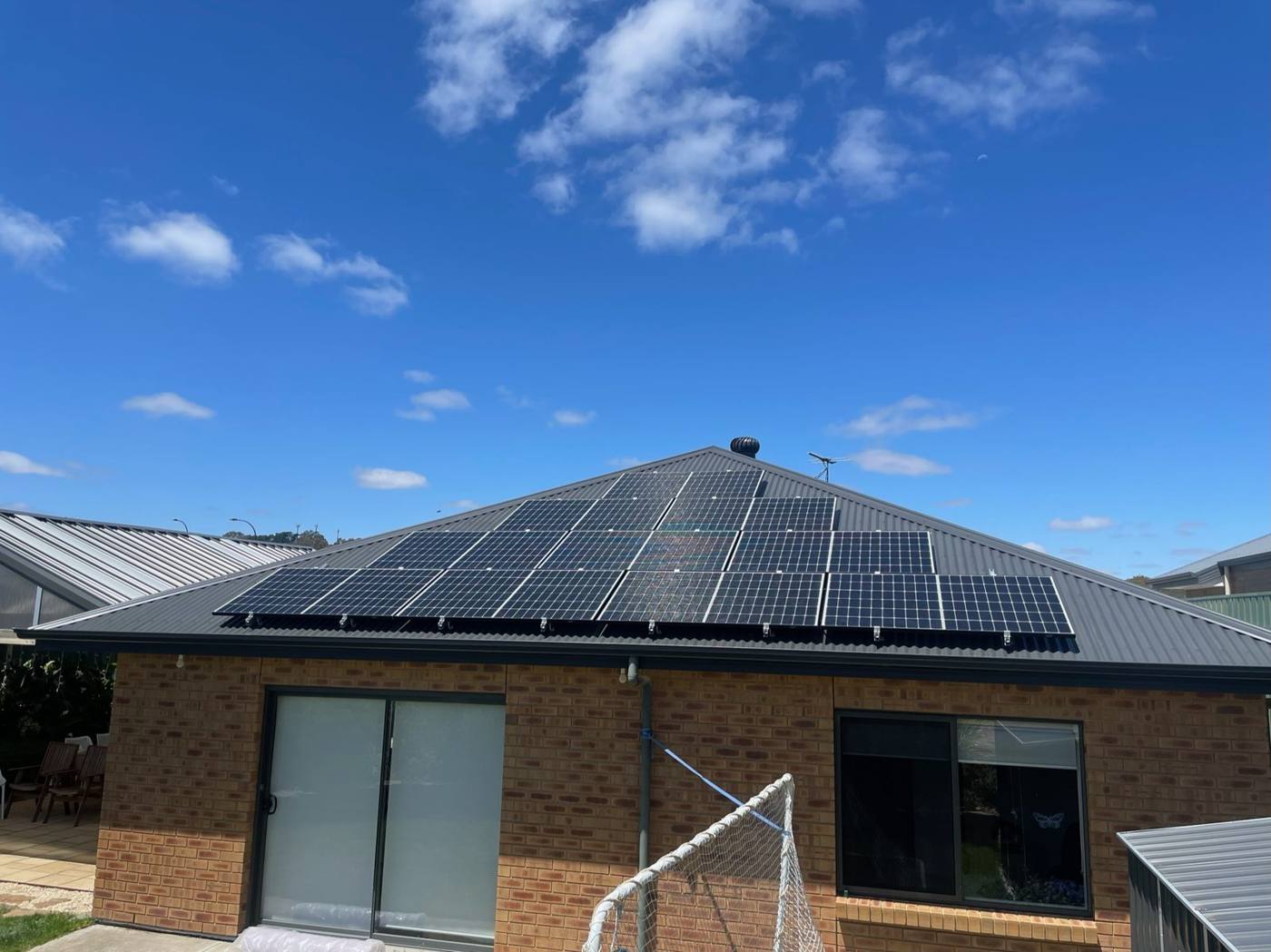
Air con and solar are a good match. Hot sunny afternoons are exactly when solar panels are producing, so a lot of your cooling can come from your own roof. Evenings are harder, which is where a home battery helps. We can quote the air con and solar together. See split system air conditioning.