A commercial electrical maintenance schedule covers switchboards, RCD safety switches, emergency and exit lighting, fixed wiring and power points, portable appliances (test and tag), and solar, battery and EV assets. Each item needs a set interval, from monthly visual checks to six-monthly emergency lighting tests and annual inspections, plus dated records and a review whenever equipment or layout changes.
- List every electrical asset with its check, interval, owner and record.
- Cover switchboards, RCDs, emergency lighting, test and tag, wiring, and solar or EV gear.
- Emergency lighting and RCD testing are commonly missed on tenanted sites.
- Review the schedule whenever equipment, layout or solar changes.
- Staff can do visual checks; switchboard, wiring and solar work needs a licensed electrician.
What is a commercial electrical maintenance schedule?
It's a written plan for every electrical task on your site. A useful one names:
- The asset. Each switchboard, RCD, exit light, charger or inverter.
- The check. Visual, push-button test, full test or service.
- The interval. How often it's done.
- Who does it. Your staff or a licensed electrician.
- The record. Date, result and any follow-up, kept where anyone can find it.
Plenty of businesses only call an electrician when something fails. A schedule turns surprise breakdowns into planned work.
Why it matters for Adelaide businesses
Under work health and safety law, businesses must keep electrical equipment and installations safe. SafeWork SA has guidance on what that means for your workplace.
Most electrical faults give warning signs first: nuisance tripping, warm switchboards, flickering lights. A schedule catches them. Adelaide summers add heat stress on boards and cooling gear, and new solar, battery and EV loads change what your supply has to carry.
There's a cost side too. Planned maintenance happens when it suits you, not in the middle of trade. A failed switchboard or a dead cool room on a 40°C day costs far more in lost stock and downtime than the checks that would have caught it.
Tell us about your site and what's on it. We'll quote the electrical and solar checks that fit how you operate.
What the schedule should cover
Switchboards and distribution boards
Visual checks for heat, damage and missing covers. Tightness and condition checks by an electrician. Up-to-date circuit labelling.
Safety switches (RCDs)
Regular push-button tests, plus periodic trip-time testing by a qualified person.
Emergency and exit lighting
Regular discharge testing and logbooks, as set out in the Australian Standard for emergency lighting.
Portable equipment
Test and tag at intervals set by the relevant Australian Standard. How often depends on the environment: harsher sites like workshops and construction need it more often than offices.
Fixed wiring and power points
Damaged outlets, overloaded power boards, cords across walkways and old wiring.
Solar, battery and EV charging
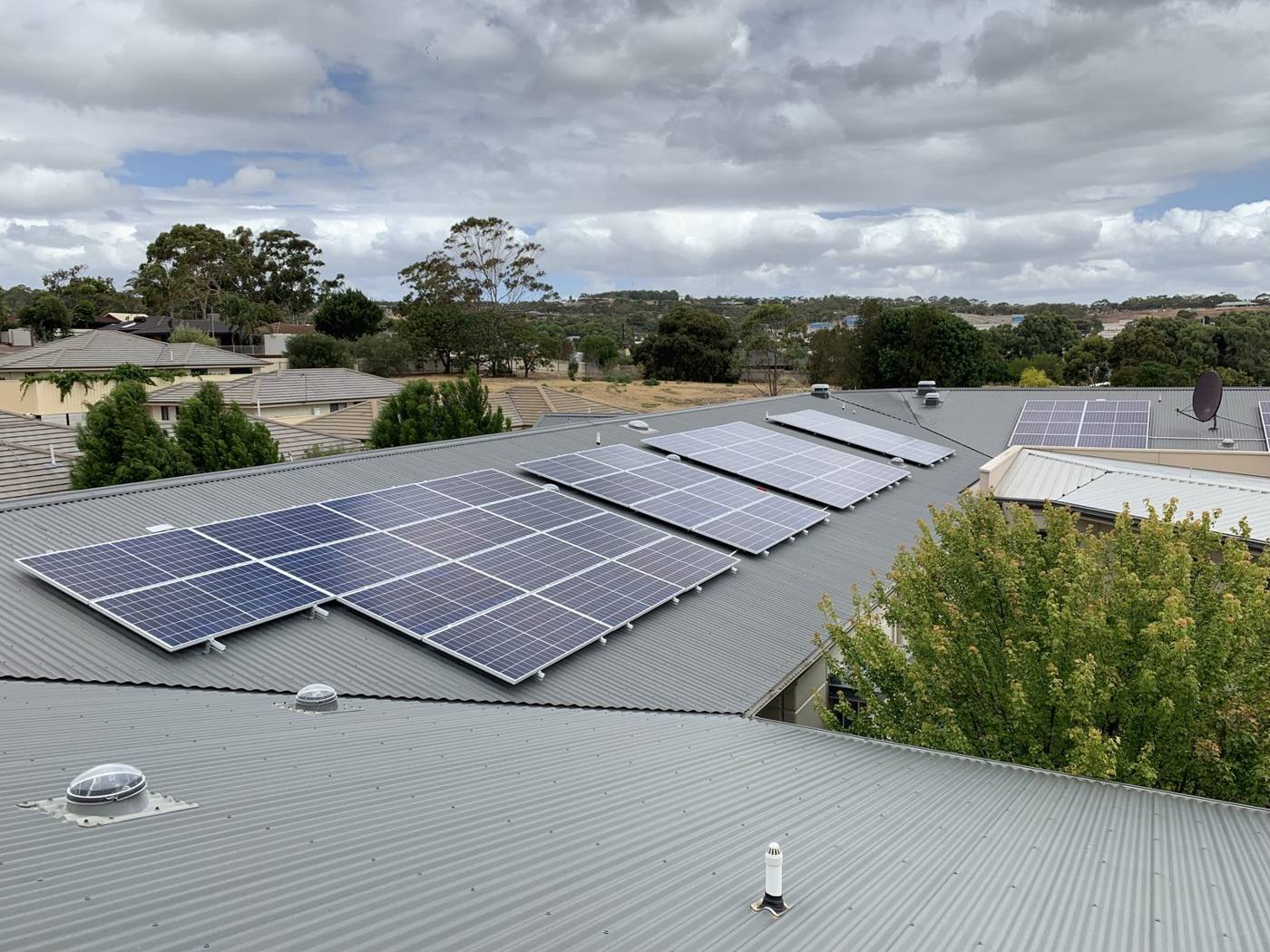
Inverter and isolator checks, panel cleaning, battery health and charger inspections. A thermal drone inspection finds faults across a large roof array that you can't see from the ground.
How often should each task happen?
| Interval | Typical tasks |
|---|---|
| Monthly to quarterly | Staff visual checks of boards, cords and lights. RCD push-button tests where your schedule calls for them. |
| Six-monthly | Emergency and exit lighting tests. Switchboard visual inspection. External lighting review. |
| Yearly | Full switchboard inspection, RCD trip-time tests, solar service and cleaning, capacity review. |
| Set by environment | Test and tag, at intervals set by the relevant standard. |
| Whenever things change | New equipment, fit-outs, extra solar, batteries or EV chargers. |
Your exact intervals depend on your industry, environment and any requirements from your insurer, landlord or industry body. Treat this as a starting point.
What gets missed most often
- Emergency lighting on tenanted sites, where tenant and landlord each assume the other is doing it.
- Circuit labelling after years of small changes.
- Supply capacity after new ovens, cool rooms or EV chargers.
- Rooftop solar. On a commercial roof in Gawler, we found built-up dirt had overheated and burnt rows of cells. The whole system needed replacing. Regular cleaning and checks would have caught it.
- Records scattered across emails instead of in one log.
Most of these are cheap to fix once someone spots them. The problem is that nobody owns them.
Keeping records that actually help
A schedule is only as good as its records. When an insurer, landlord or inspector asks what's been done, you want to find it in minutes.
- Keep one log for the whole site, not one per contractor
- Record the date, who did it, what was tested and the result
- Note any fault found and when it was fixed
- Keep emergency lighting logbooks on site where they're expected
- Update the switchboard schedule and circuit labels after every change
A simple spreadsheet works. The point is that it's in one place and kept current, so nothing slips when staff change.
Who should carry out the work?
Your staff can handle visual checks and RCD push-button tests if they're shown how. Anything that involves opening a switchboard, testing protective devices, fixed wiring or solar must be done by a licensed electrician.
We do commercial electrical and solar work right across South Australia. See commercial electrical services and commercial solar, or ask us about the electrical and solar side of a schedule for your site.
If you lease your premises, check your lease. It often spells out whether the landlord or tenant is responsible for things like emergency lighting, switchboards and test and tag.