After a hail storm, stay off the roof, check your monitoring app and inverter for errors or lower output, and photograph any visible damage from the ground. Then book a thermal inspection, which finds micro-cracks and hot spots you can't see. Many home policies cover storm damage to solar, so call your insurer with the inspection report.
- Hail can crack cells without breaking the glass.
- Stay off the roof: damaged panels can still be live in daylight.
- A thermal inspection finds hidden cracks and hot spots.
- Our home hail check is $149 in hail season. Full thermal inspections are normally $750.
- A report with thermal images, a panel map and an electrician's recommendation backs your claim.
Signs your solar panels have hail damage
- Visible cracks, chips or a cloudy, shattered look on the glass
- Lower output than usual for the weather in your monitoring app
- Inverter errors, especially isolation or earth fault warnings
- Dented frames or damaged roof sheeting around the array
Plenty of hail damage shows none of these straight away. Micro-cracks in the cells can take months to show up as lost output, and by then it's harder to link them to a particular storm.
How hail damages solar panels
Solar panels are built with toughened glass and tested against hail, so most storms don't break them. The risk is what happens underneath. A hard impact can flex the glass enough to crack the thin silicon cells, even when the glass survives.
Those micro-cracks don't always cut output straight away. Over months of heating and cooling they can spread, cut off parts of a cell and create hot spots. Hot spots make less power and, in bad cases, can damage the panel further.
Hail can also dent frames, damage cable and connectors exposed on the roof, and crack roof sheeting or tiles around the array, letting water in.
Send us your details and what happened. We'll book a thermal inspection and give you a report for your insurer.
Why thermal imaging finds what you can't see
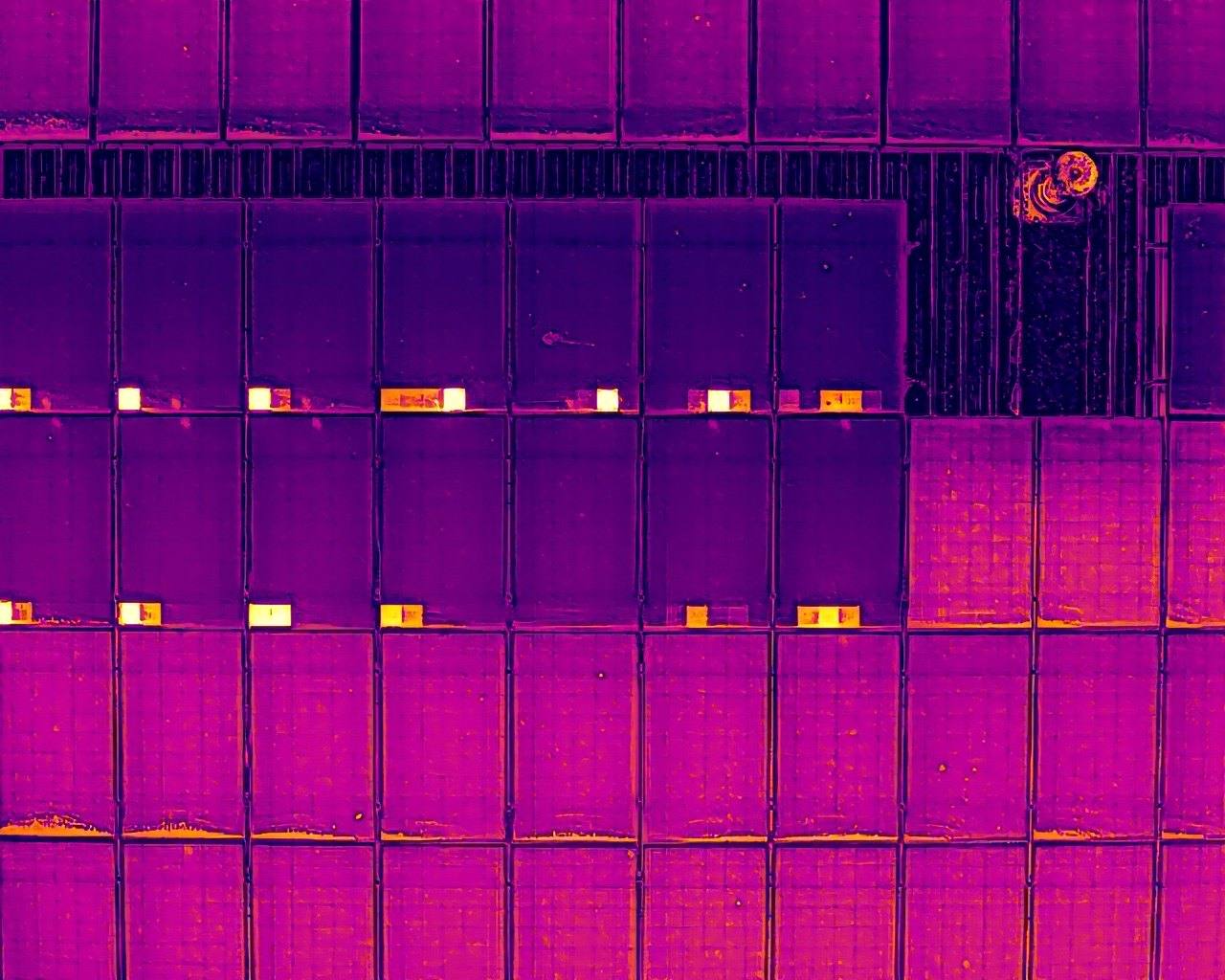
A healthy panel runs at an even temperature. Cracked cells, failed bypass diodes and bad connections run hotter. Our DJI Matrice 4T thermal drone, flown by a CASA-licensed pilot, picks up those hot spots across the whole array in one flight. The zoom camera then checks the glass and frames up close.
Nobody walks on your panels. That matters, because walking on panels can cause the very cracks you're trying to find.
What it found in Gawler
On a commercial roof in Gawler in October 2026, the thermal camera showed rows of cells that had overheated under built-up dirt. From the ground they looked fine. The cells had burnt and the whole system needed replacing. That wasn't hail, but it's the same lesson: damage you can't see is still damage, and a regular check would have caught it.
What to do after a hail storm
- Stay off the roof. Damaged panels can still carry live DC voltage in daylight, and wet roofs are slippery.
- Check your app and inverter for errors or a drop in output. If you're not sure how to get your monitoring back online, see connecting a Sungrow inverter to WiFi.
- Take photos from the ground of anything you can see, with the date.
- Book an inspection. Our home hail check is $149 during hail season. A full thermal inspection is normally $750.
- Call your insurer with the report. Many home policies cover storm damage to solar, but check yours.
If you smell burning, hear crackling or see smoke from the inverter or panels, don't touch anything and call us on 0425 322 552.
What a hail check costs
| Inspection | Price | Best for |
|---|---|---|
| Home hail check | $149 | Homes after a storm, during hail season |
| Full thermal inspection | $750 | Larger systems, commercial roofs, detailed fault finding |
Both use our thermal drone, so the inspection is done from the air without anyone on your roof. See thermal drone inspections for how it works.
Making an insurance claim
Insurers want to know what was damaged, how and when. A good report includes:
- The inspection date and conditions
- A panel map with each fault marked
- Thermal and zoom images of every flagged panel
- A licensed electrician's recommendation to repair or replace
That's what our report covers. The decision on your claim is always your insurer's. We can also quote and complete the repair work. See solar insurance work.
Lodge the claim promptly. The longer the gap between the storm and the inspection, the harder it can be to show the damage came from that event.
Repair or replace?
A few damaged panels can usually be swapped, as long as a compatible panel is still available. Panel models change often, so on older systems an exact match can be hard to find.
If your panels are no longer made, or a lot of the array is affected, replacing the system can make more sense. It's also a good time to add a home battery. We'll give you both options so you and your insurer can compare.
Either way, damaged panels should be dealt with rather than left on the roof. A cracked panel can let moisture in over time, which can lead to faults that trip the inverter or affect the rest of the string.