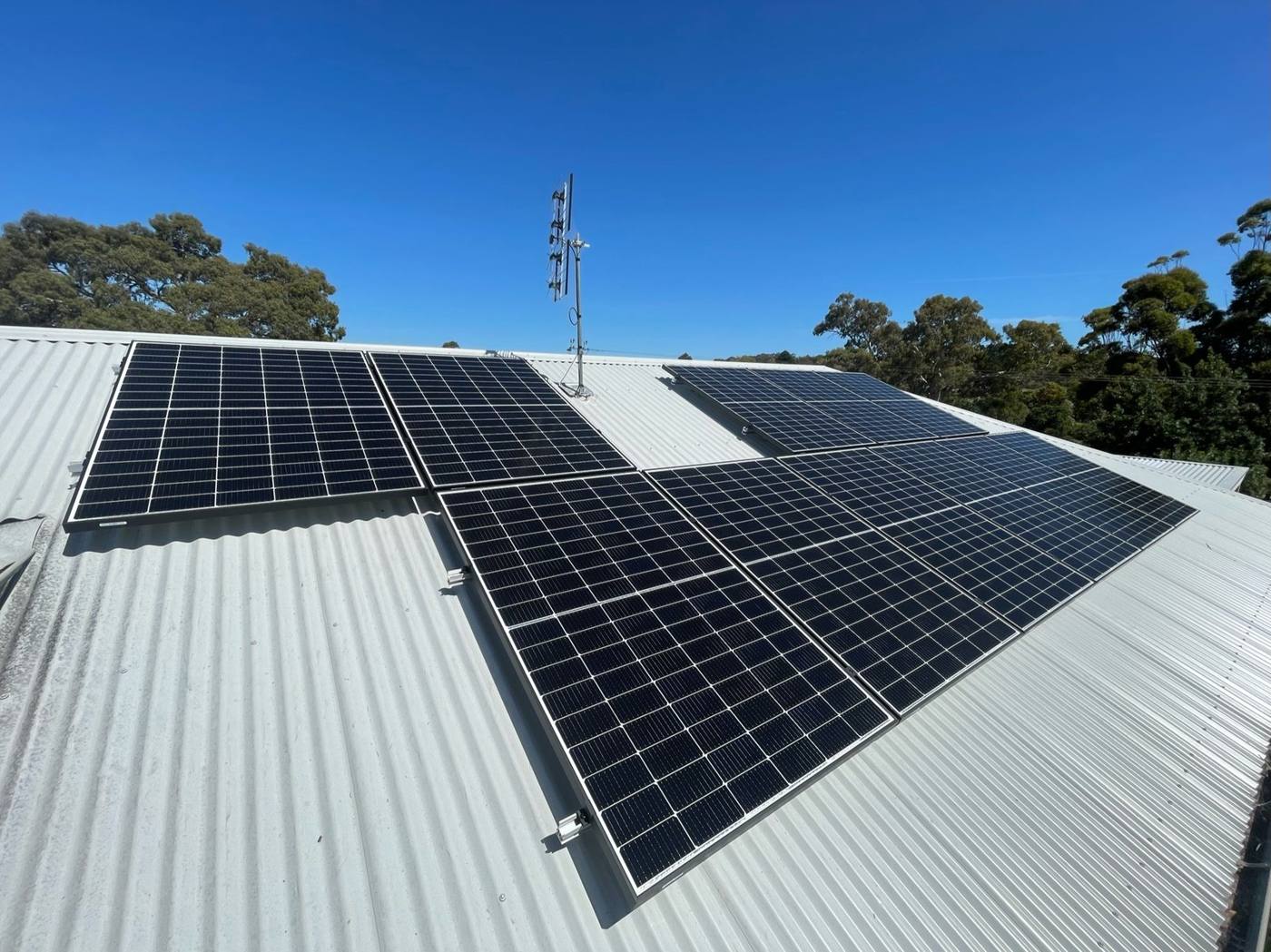
Seal the gap under your solar panels with bird-proofing mesh fixed to the panel frames, with no drilling into panels. Clean out any nests and droppings first, then fit the mesh around the full perimeter so there are no gaps at corners. Do it early, before birds settle in, and use a licensed installer so cables and warranties aren't put at risk.
- Birds nest under panels because the gap is warm, dry and safe.
- Mesh clipped to the panel frames around the whole array is the fix that lasts.
- Spikes, owls and tape don't remove the shelter, so birds come back.
- Clean out nests and check the cabling before fitting mesh.
- Do it before birds settle in, and check for protected native birds first.
Why birds go under solar panels
The gap between your panels and the roof is warm, dry, shaded and out of reach of cats and hawks. To a pigeon, it's prime real estate. Once a pair nests there, they come back every year and others follow.
Pigeons are the main culprit around Adelaide, along with sparrows, starlings and mynas. Homes near trees, shops, silos or industrial areas tend to get hit hardest.
Birds also like the warmth. Panels heat up in the sun and the roof below holds that heat into the evening, which makes the gap even more attractive in cooler months.
What birds under panels actually cost you
| Problem | What happens |
|---|---|
| Lower output | Droppings on the glass block light. Nests trap heat under panels, and hot panels make less power. |
| Cable damage | Birds peck and pull at cabling and connectors, which can cause faults. |
| Roof and gutters | Nesting material and droppings block gutters and can stain or wear the roof. |
| Fire risk | Dry nesting material packed around hot cables and connectors is not something you want on your roof. |
| Hygiene and noise | Droppings, mites, smell and early-morning noise, especially near bedrooms. |
Droppings on panels can also create hot spots on cells. Our thermal drone picks these up, and in bad cases cells can be damaged over time.
Tell us how many panels you have and what's going on. We'll clean out the array and seal it off.
What actually works: bird-proofing mesh
Mesh is the method that works long-term. It's a stainless or coated wire mesh fitted around the full edge of the array.
- Fixed to the panel frames with clips, not drilled into the panels or the roof.
- Closes the gap completely, including corners and joins, where DIY jobs usually fail.
- Keeps airflow under the panels, so they stay cool.
- Barely visible from the street once fitted.
What doesn't work well
Spikes, plastic owls, reflective tape and sound devices might move birds on for a while. They don't remove the shelter, so birds usually come back. Gels and sprays can make a mess on the glass.
DIY kits vs professional bird proofing
DIY kits are cheaper up front. The catch is everything around them.
- You're working on a roof, often at height, around live solar cabling.
- Gaps at corners and between rows let birds straight back in.
- Wrong clips or drilling can damage frames and affect panel warranties.
- Cheap mesh can rust and stain the roof.
- Nests and droppings need clearing first, which is the dirtiest part of the job.
We clear out the array, check the cabling for damage, clean the panels and then fit the mesh. See our solar bird proofing service.
How we bird proof a solar array
- Inspect. We look at the array, the roof and where birds are getting in, and check for protected native species.
- Clear out. Nests, sticks and droppings are removed from under the panels and out of the gutters around the array.
- Check the cabling. Birds chew and pull at cables and connectors. Anything damaged is reported and repaired.
- Clean the panels. Droppings on the glass are cleaned off so the panels can produce properly again.
- Fit the mesh. Mesh is cut to size and clipped to the panel frames around the full perimeter, with corners and joins closed off.
If the birds have caused damage to cabling or panels, we'll tell you what we found and quote the repair before going ahead.
When to bird proof your solar panels
The best time is before birds move in. If you've just had solar installed and you've got pigeons nearby, do it now.
If birds are already nesting, we remove the nests and droppings, clean the panels and then fit the mesh. Most native birds are protected in South Australia. If natives are nesting, we may need to wait until the young have left. Introduced species like feral pigeons aren't protected the same way.
Bird proofing pairs well with a yearly service. Read when to schedule solar maintenance and see our solar panel cleaning page.
How long does bird proofing last?
Good quality mesh, properly fitted, is built to sit on a roof through heat, rain, wind and UV for many years. What shortens its life is poor fitting, cheap materials and damage from people or storms.
If you spot a bird getting in, get it checked quickly. One gap is all it takes for nesting to start again.
Keep an eye out each time you're in the yard. Birds sitting on the gutter right next to the array or sticks poking out from under the panels are early signs of a gap.